
Publication details
Published by WBTi UK / Breastfeeding Trends UK on 7 August 2021 to mark World Breastfeeding Week 2021, the guest article was written by Lisa Creagh. WBTi introduced Holding Time as work that demonstrates the importance of society collectively understanding, supporting and protecting breastfeeding.
Archive description
In this World Breastfeeding Week 2021 guest article, Lisa Creagh reflects on The Holding Time Project and its Coventry programme. Mothers from diverse backgrounds shared breastfeeding experiences through interviews, storytelling workshops and photography, resulting in animated portraits, films and permanent hospital displays. The article presents Holding Time as a socially engaged feminist art project designed to challenge cultural barriers and increase understanding and support for breastfeeding.
Key impact / relevance summary
The article gives a strong early articulation of the Holding Time methodology. Creagh describes the project as multi-channel, multi-platform and city-to-city, working with academics, health professionals and grassroots organisations to create socially engaged feminist art intended to contribute to meaningful change in UK breastfeeding culture and policy.
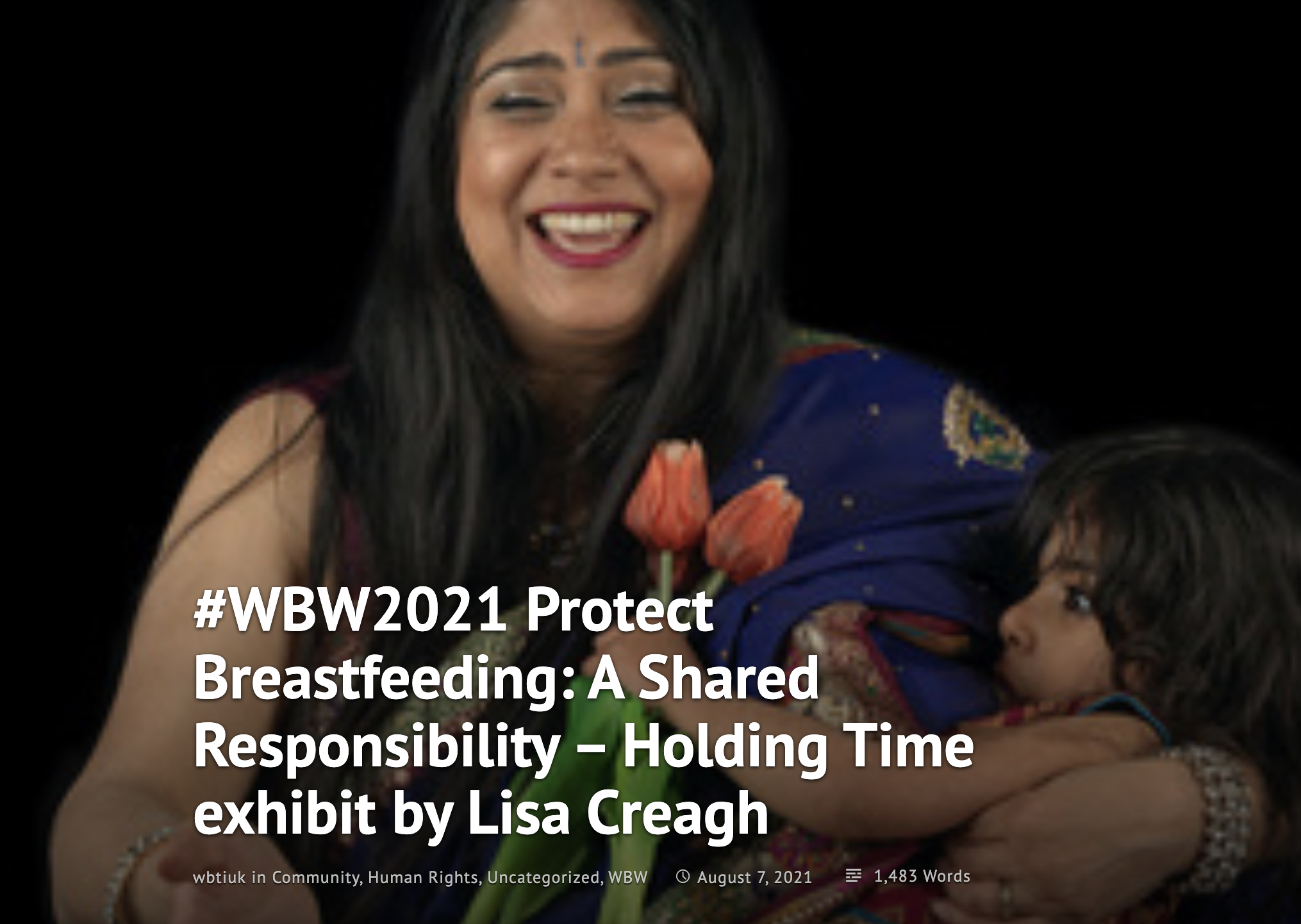
The Coventry phase recruited mothers from a wide range of backgrounds and combined Zoom interviews, storytelling workshops, portrait photography and animation. Outputs included 12 new animated portraits, a large group portrait, 16 video interviews and seven permanent images installed in the labour ward at UHCW, creating a lasting local legacy.
Project significance
The article is particularly useful for evidencing Holding Time’s early development as a co-created and participatory model. It explicitly describes the project as confronting structural and cultural barriers to breastfeeding, including stigma around women’s bodies, while giving mothers a platform to share experiences that are often absent from mainstream representations of infant feeding.