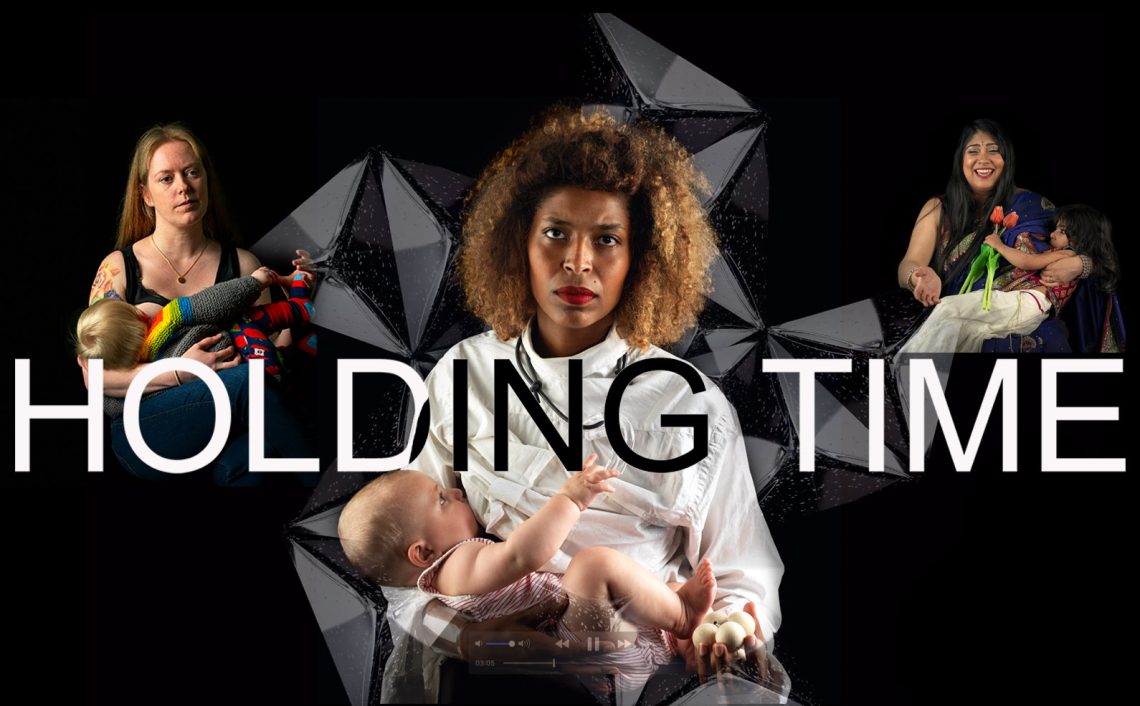
Interview with Alexandra
[00:00:00] Lisa: You had your baby in Bradford. Did you have your baby in Bradford Infirmary or?
[00:00:05] Alexandra: One in Leeds and then one in Saltaire because I had a home birth with her.
[00:00:09] Lisa: Yeah, oh, okay.
[00:00:11] Alexandra: Yeah, it was the BRI, so it was the home birth team of the BRI.
[00:00:15] Lisa: And then did you have any dealings with the infant feeding team at Bradford?
[00:00:19] Alexandra: I did, yeah, so we were brought in for her newborn checks, and then someone said, oh, I think they might have a tongue tie, and I was like, uh, me too, I also suspected. So then, yeah, we got an appointment with Ria’s team, and then, yeah, she had a tongue tie, but she didn’t need it snipped. It was really posterior, and she said, I don’t want to make too much scar tissue, I’d rather just leave it.
[00:00:40] Alexandra: So we left it and we kind of did different positions and that worked and she just grew out of it. And so how old are your children? So one is seven and a half and one is 20 months. Okay, so
[00:00:54] Lisa: did you have your first one when you were quite young?
[00:00:57] Alexandra: Yeah, I was 20 when I had my first. So I was 19 and then I found out I was pregnant on my 20th birthday.
[00:01:03] Lisa: Wow. Yeah. Wow, and so you’re not the only younger mum in the project. There’s also another mum who’s older. But has like a 24 year old, you know, a young mum years ago, and we had a good conversation about how things are different now to back then. But how did you find the experience of birth and breastfeeding?
[00:01:26] Lisa: Was it a good birth being a home birth?
[00:01:29] Alexandra: Yeah, it was. It was. My first one was very nearly a home birth. Hence why I had a home birth the second time, because I just, I much preferred being at home.
[00:01:37] Lisa: Yeah, it
[00:01:39] Alexandra: was, it was beautiful. It was really lovely. As birth goes, it didn’t perfectly go planned, but you know, you’re expecting it not to.
[00:01:47] Alexandra: But yeah, it went well.
[00:01:48] Lisa: Yeah, you don’t tend to hear women describing birth as beautiful when it’s in the hospital. I
[00:01:54] Alexandra: mean, it’s Yeah. Exactly. Quite a different experience. It’s much more clinical and sterile and, you know, your oxytocin level all drops because you’re just so stressed and it was, yeah, the first time was really, it was, once I actually got into hospital, it was really traumatic and I really wish I’d just stayed at home.
[00:02:13] Lisa: Yeah, I hear that quite often, actually.
[00:02:17] Alexandra: Yeah.
[00:02:18] Lisa: So, were you made to go into hospital the first time, or you just planned to go into hospital, but it was quick, or?
[00:02:23] Alexandra: I’d planned, I’d planned to go to hospital, and I’d laboured all day. I’d sent my husband into work, obviously not husband at the time, but I’d sent him into work, I said, This can’t be it yet, you know, first babies take ages, ba ba ba ba ba, and I just sat at home, watched telly, really relaxed, and you know, I know now looking back my labour was progressing beautifully, and I was just popping paracetamol and bouncing on my ball.
[00:02:47] Alexandra: And then I was like, oh, I can feel a bit of pressure, this feels a bit strange. So I rang my husband and I said, oh, I think you need to come home. He’s like, oh, yeah. Got there and my sister, who just qualified as a midwife, she popped round because she was going to take us to the hospital. She’s like, oh, well, I’ll just come and have a look at you.
[00:03:02] Alexandra: And at that point I’d like, stripped off, I was naked, in the bath, pushing, and I was like, something’s happening, and she was like, yeah, I think your baby’s coming. And I was like, no, it can’t be, not yet, not yet. Wow. So it’d just not been like, you know how you see women on people on TV, screaming and crying and really in a lot of pain?
[00:03:21] Alexandra: That just didn’t happen. So I just, I was like, this can’t be it. That
[00:03:25] Lisa: stage where you sort of were in the bath and were pushing, it wasn’t that it was. painful. It was more just that it was, that was just your instinct to do that. God. Yeah,
[00:03:37] Alexandra: it was completely instinctual. I was terrified of giving birth. I thought I’d be, had like, I wanted an epidural, I didn’t want any, like, I didn’t really want to have water birth because I was too scared in case it hurt.
[00:03:49] Alexandra: And I’d started off my pregnancy wanting that, but as you progress and you get close at the end, you get a bit more, like, worried. And I was like, no, I want, I want all of the pain relief, please. Yeah, I didn’t need it. Wow. I’m really, really very lucky and really grateful that both experiences have been like that.
[00:04:06] Lisa: The first time you did go into hospital to give birth, or did you give birth at home with your sister?
[00:04:11] Alexandra: Yeah, I did. My sister, she was like, I’m not risking my license, I’ve just qualified, we need to go. So she just put me in the car, she wrapped my bottom half, essentially, in bin bags, because she was like, your waters are going to go, because they’re not gone yet.
[00:04:25] Alexandra: And then, yeah, we rushed to the hospital. And then my waters went in the lift on the way up to the maternity ward.
[00:04:30] Lisa: Right.
[00:04:31] Alexandra: Waters went and I was like, oh. And then when I got there, because I was young and because it was my first baby, the woman on the desk was like, oh, you can’t be in labour. And at that point I was like, animal noises, pushing.
[00:04:44] Alexandra: And I couldn’t speak, I couldn’t do anything. And she passed me this pot and she said, oh, can I have a urine sample? And I was like. No. And she’s like, no, we need one. And I was like, I physically can’t. So she made me go to the toilet and I refused to close the door because obviously I was convinced this baby was about to come out, which he was.
[00:05:04] Alexandra: It was hovering, trying to hover away and obviously just pushing every time I was trying. It was just making more contractions. So I was like, I just crawled out and I was just shaking my head. So I was like, it’s not happening. And really, luckily, a senior, older midwife came running down the hall, she grabbed me and she was like, are you pushing?
[00:05:22] Alexandra: And I was like, yes, that’s all I could do was just nod my head. And she was like, okay. Took me to my Dignity Assessment, I had a quick peek and she was like, yeah, the head’s there. And then rushed me off to another room and then he was born. I don’t even know, like. under half an hour later.
[00:05:38] Lisa: Yeah.
[00:05:39] Alexandra: I was pushing them off me, they were trying to strap me up because obviously no one had heard his heartbeat, no one had been monitoring anything, and I was just like, get off me, don’t touch me, and then he just Which came out.
[00:05:50] Lisa: Yeah, I had a similar birth to that. Really? And it’s quite unusual because I was 40. So, I kind of met with the same sort of prejudice in a way. They were like, it’s your first baby, this is going to take ages. They stuck me in a room with like, someone who’d been qualified two weeks and had never had a baby in their life.
[00:06:06] Lisa: I had been doing all this hypnobirthing and I don’t know if that was part of it or Maybe. Just, I was like, very relaxed or Yeah. But I went into labour at two in the morning and I kind of like, cruised through till six.
[00:06:20] Alexandra: Yeah.
[00:06:20] Lisa: And then got in a taxi to the hospital because I had a planned hospital birth.
[00:06:24] Lisa: And when I got to the hospital, I was like, uh, I really am going to have a baby pretty soon, you know? I was at that point you’re describing where you, you can’t speak because the contractions are coming so quickly.
[00:06:36] Alexandra: Yeah.
[00:06:37] Lisa: They were like, well, did you bring proof of your water’s breaking? And then I said, no, well, you know, as much as I could.
[00:06:45] Lisa: And they were like, well, then we can’t really give you a room. So they put me into triage and I was sitting on this tall bed. It was so uncomfortable. They sat me there. They kind of caged me there. For about two hours. And, and eventually this really nice midwife sort of started to, to help me. ’cause I was just, I was like leaning and walking and thinking, God, I’m gonna, I’m basically gonna give birth on a very hard floor.
[00:07:10] Alexandra: Oh.
[00:07:11] Lisa: And then they said, okay, we’ve got a room. But they obviously didn’t have a midwife. I think that was the problem. Mm-Hmm.
[00:07:17] Alexandra: There’s no person in the room.
[00:07:18] Lisa: And this nice midwife came in that had been helping me and she, I had like 45 minutes with her where she helped me breathe and stuff. And she just felt a nest on the floor for me and.
[00:07:28] Lisa: They were messing around with me and I, I think that my baby was there 45 minutes later, you know? Yeah, exactly. It was really fast. So are you still breastfeeding your youngest? Yeah, that’s nice. So you’ll be able to do the photography shoot.
[00:07:44] Alexandra: Yeah, that would be lovely. I’d really like that.
[00:07:47] Lisa: Yeah.
[00:07:47] Alexandra: Yeah, I don’t think she’s got any plans to stop any time soon.
[00:07:51] Alexandra: So,
[00:07:52] Lisa: how did breastfeeding go with your, with your first baby?
[00:07:56] Alexandra: Awful at first. It was just horrific. I was really determined to breastfeed. So I just knew I’d just power through it no matter what. And then I remember being on the postnatal ward and ringing. Like they tell you to do, you have to ring every time, you know, that you latch them on to make sure that everything’s fine.
[00:08:14] Alexandra: And I just was getting tottered at and huffed at and then in the end no one was coming to check my latch. And then I was like, it’s hurting, I don’t think he’s getting anything. And then he was getting really bad jaundice, he was really sleepy, and I was getting worried, but nobody was coming to check me, and then I just got sent home.
[00:08:32] Alexandra: Even though I was, I couldn’t walk, you know, my birth had been beautiful, but afterwards it really hit me. I couldn’t walk, I could barely stand up, I’d lost, I’d had a postpartum haemorrhage, but only under a, under a litre. So not a lot, but enough to kind of make you feel dizzy. And then they just sent me home with this baby.
[00:08:53] Alexandra: No one had really seen him feed properly. They all said, oh, he’s fine, he’s fine. And then I went home and I was just scared. I was terrified. And then he got a little bit jaundiced. And again, every midwife was coming out. I was like, can you look at my latch? I’m in lots of pain. They said, oh, no, everything’s fine.
[00:09:08] Alexandra: Your latch is fine. Didn’t try offering any advice, didn’t try adjusting anything, didn’t It was just, well, you’re choosing to do this, so, you know, you can always offer a bottle. Give yourself a break, you know. I was like, this is awful. And luckily, my sister, she knew someone who she trained with, who was an independent midwife, who was very pro.
[00:09:31] Alexandra: Free birth, pro hypnobirth, very, you know, very hippie ish, quite similar to me. So she sent her around and then she adjusted everything and she said, just go to bed. And no one had taught me that. She said, just go, make a nest, get comfortable and just look after you and baby. And I was like, oh, that makes so much sense.
[00:09:52] Alexandra: And then I did that and then It didn’t get easier for a while because I think he had a tongue tie, same as, same as this one because it was the exact same pain, exact same struggles we had. But nobody listened and nobody assessed. Nobody referred me anywhere. Nobody was interested.
[00:10:10] Lisa: Wow.
[00:10:11] Alexandra: Yeah, and I was going to a group, because there was no home visits then.
[00:10:16] Alexandra: So I had to go out to the groups and it was quite close to my house luckily. Realistically, it was run by a health visitor, so surely she should have referred me on some way. But I know this now looking back, but I’d just powered through and it was really rough.
[00:10:29] Lisa: What year was your son born?
[00:10:32] Alexandra: 2017. Oh. So why was there no, Home visits?
[00:10:37] Alexandra: Health visitor come round, but my health visitor, again, wasn’t particularly useful, and I don’t think there was any breastfeeding support service that I had access to that I knew of. I just knew of the group. Yeah, so really
[00:10:50] Lisa: you’re talking about before the setup, really, of the services they’ve got now.
[00:10:55] Lisa: Exactly. Oh, it’s interesting. So you got to experience it much more recently. Was it different?
[00:11:02] Alexandra: Yes, but yes and no, but because of where we lived at the time. I was under the K Trust and they called but I think at that point it was quite late. I think at that point I’d already been seen by Rhea so I said, oh, no, this is happening but we’ve already been assessed so actually I don’t need you to come round but they would have done if I’d have needed but we’d already been seen and I think me knowing more that time and I’d just trained as a A doula with Bradford doulas.
[00:11:29] Alexandra: I like, I just knew who to talk to, so I had contacts.
[00:11:33] Lisa: Yeah, yeah. I mean, knowledge is power, isn’t it? And
[00:11:37] Alexandra: yeah,
[00:11:37] Lisa: I think that’s one reason why lots of women that I meet, they, they have an experience of birth or breastfeeding and then they do have a pivot. Like, yeah, even a doctor that I spoke to the other day, she’s changed her whole career around Breastfeeding, because it’s, it’s such an eye opener, isn’t it?
[00:11:54] Alexandra: It is, and I think it highlights so many kind of gaps in the medical care system, especially for women and especially for birthing people and, you know, it’s, It’s opened a lot of people’s eyes, and mine especially.
[00:12:06] Lisa: Yeah, so before you had your son, you were like, kind of footloose and fancy free, 19 year old.
[00:12:15] Lisa: Yeah. Is it harder to adjust when you’re young, or do you think when you’re young maybe you can kind of bounce back from that? More quickly, you know, like, in terms of reality shock, because I, like I say, I was 40 and yeah, yeah, I just couldn’t get over it. That’s why I’m still 12 years later running this project, because it’s like, sent me into the outer stratosphere of shock in terms of, you know, Wow, I had no idea, you know.
[00:12:40] Lisa: No,
[00:12:41] Alexandra: I had the exact same experience. I often say this, but I think I genuinely went into shock when I had my son. And I don’t think I’ve quite come out of it.
[00:12:49] Lisa: Yeah. And nothing has been the same since. It’s really funny, I was out with a friend the other night, we And she hasn’t got kids and she’s really wonderful and lovely.
[00:12:59] Lisa: She hasn’t got a partner or kids. She was talking to me about, I don’t know, some healer. She’s really big into Buddhism and stuff and she was like, yeah, this is healer and she’s coming and maybe you’d enjoy that. I sort of sat there and I thought, Hmm. Yeah, that’s the kind of thing I would have done before I became a mother.
[00:13:19] Lisa: And then I sort of thought, how do I explain this to her, that what I went through was like the ultimate reset, you know? Yeah.
[00:13:28] Alexandra: Yeah.
[00:13:29] Lisa: I don’t know, I had to dig so deep to find the strength to get through it. Yeah. That I’m just, I’m just utterly changed. And now, I don’t know if I’m just so much more resilient.
[00:13:40] Lisa: Or I have got into the habit of not caring as much about myself. I’m not sure it’s a bit of kind of both. I just have totally different needs.
[00:13:48] Alexandra: Your worldview just changes and everything changes. It is like being born again, I think, and
[00:13:55] Lisa: yeah. I remember one of the first things that really struck me, I mean there were so many, but one of the first things that really struck me was that really, all those love songs that mention babies, they’re actually probably about babies.
[00:14:10] Lisa: Yeah. There
[00:14:13] Alexandra: is no love like your babies. And even, I didn’t feel it at first. With, you know, my son, like I said, I think I just went into pure shock. It wasn’t, I didn’t have that, oh, this is my baby. I was just a bit like, what, what’s this? Yeah, there was no correlation between that baby I’ve been talking to and soothing in my tummy and singing to and then like it come out And I was like you’re not that baby because it was just so Real, like, you know the way you can feel the bodies.
[00:14:40] Alexandra: I was like this is so strange Strange just really strange and then yeah, it took time and I think because of the Well, mainly the breastfeeding struggles and I think I didn’t really have a lot of family support. It was hard. So I think it like drifted into postnatal depression. So then that took a while to kind of clear, maybe about a year.
[00:15:01] Alexandra: And then after that, I was like, oh, this is, this is what everyone talks about. This is, you know, the love, the happiness, all that.
[00:15:10] Lisa: Yeah, you’ve basically just described my first year. That’s kind of what happened for me. I, I find it quite interesting, like, when you say you drifted into post natal depression, it’s sort of like, that just seems so common and, and almost, I mean, not to minimise it at all, but it seems just quite normal because it’s like, how else does a rational person respond to this level of change?
[00:15:36] Alexandra: Yeah, and just the change, the stress. Everyone talks about the lack of sleep, but it’s torturous levels of sleep deprivation. Yeah, nothing revolves around you anymore. You have to do everything for this tiny human, and it’s even just things like getting out of the house. It’s like, how do I get dressed? How do I brush my teeth?
[00:15:56] Alexandra: How do I do anything? And it’s just that adjustment period.
[00:15:59] Lisa: Yeah.
[00:15:59] Alexandra: And also the
[00:16:00] Lisa: thing that killed me was the vulnerability, you know, the fact that all of a sudden I was no longer a sort of unique person that could just go out into the world and, you know, do what I want. Now everything had implications, you know.
[00:16:18] Lisa: If anything happened to me, then she would suffer. And that, the thought of that was so unbearable. And then also, if anything happened to her, I would just suffer unbearably. And the vulnerability that that brought up was just, and suddenly everything in the world just started to look like a threat, you know, like it could harm my baby or me, you know?
[00:16:42] Lisa: I
[00:16:42] Alexandra: remember the first time I ever left the house to go and get My boy registered, you know, looking around at the same street that we’d lived on and I’d seen, you know, however many times and I was like, this looks totally different. This world is now different, my life is never the same again. It’s just such, there’s just no words, I think, for how big of an impact
[00:17:04] Lisa: it has.
[00:17:04] Lisa: I think it’s like Doctor Who, you know, when he goes through the multiverse and ends up in the same street, different times. universe, you know?
[00:17:13] Alexandra: Yeah,
[00:17:14] Lisa: yeah. It looks identical but now it’s got this other being in it and that other being has changed everything. And actually the other thing, you know, that it struck me is that all the religion, all this whole obsession with the baby Jesus, I mean I was brought up Catholic, it’s like, oh I get it now because this magical child actually does change reality and it’s every child.
[00:17:39] Lisa: Has that kind of impact and it’s, I don’t, I still think it’s insanely hard to understand, you know, on the same level that death is insanely hard to understand. I think we talk a lot about how death’s hard to understand and process, but we don’t really talk enough about how hard birth is to process. It’s the enormity of it, the scale of it.
[00:18:02] Lisa: One mother that was in the project described it as existential dread. Like, she had really bad postnatal depression, and she talked about this thing of like, she’d been sold this idea of motherhood as being about bows and teddy bears, and the reality was just, well, like you say, you feel the body with bones and knees and elbows coming out of your body.
[00:18:23] Lisa: It’s unbelievable. And then, yeah. This living being arrives next to you that’s utterly dependent on you.
[00:18:32] Alexandra: Yeah, the reality of motherhood and birth and all of that is very, like, dirty and it’s grizzly and it’s just very primal and it’s, it’s Yeah, no one can tell you what that’s like until you go through it.
[00:18:48] Lisa: But it’s also got this magical element, this kind of insane sort of fizzle to it that makes everything is like sparky and alive in a new way, you know, it’s like almost psychedelically Yeah. Yeah, so I was trying to explain to this friend I was like, well, so you know in the five days post birth I went on a kind of transformative like, trip really, where I just encountered all my other selves and all these other worlds and she was like, what really?
[00:19:19] Lisa: And I was like, I couldn’t describe it. I was like, well, it needs to have a very high temperature. But I mean, it was just, it affected, birth just affected me in this like really insane way. And I was really conscious of like pretending to be kind of like a normal person when they were driving me around.
[00:19:36] Lisa: Yeah, same, same. And trying to look normal. And then people may notice that I am in this altered state. I mean. Yeah. Yeah, no, I totally
[00:19:45] Alexandra: understand that. It’s not just a sleep deprivation,
[00:19:48] Lisa: yeah.
[00:19:49] Alexandra: I think it’s a mix of everything and everyone talks about labour and birth and how horrific it is and you hear all these horror stories but no one tells you afterwards.
[00:19:59] Alexandra: It’s not spoken about enough. It’s that, like, that five day period and onwards, but those first five days, especially when your hormones are just all over the shop, no one talks about that.
[00:20:09] Lisa: Yeah.
[00:20:10] Alexandra: I think it’s so important to bring awareness to it, because I remember day three, milk came in. I was delusional, absolutely delusional, and just, like, locked myself in the bathroom crying, just, what, like, what’s going on, what, like, I don’t know what’s happening to me.
[00:20:27] Alexandra: Now I know. Totally normal. Like, it’s totally normal, and everyone experiences.
[00:20:32] Lisa: I was so glad, because I had a friend, I was, like, working in the arts at the time, and I had a friend, she was a much older woman, and she’d had two children, and she’d adopted two children, and she was just this brilliant woman, who worked in the East End of London, and she said to me, Now, when you have a You’re going to cry and it’s going to be normal.
[00:20:52] Lisa: And she just, she, she set me up for that. She’s like, on day three, you’re going to sob like nothing else. I mean, I didn’t just sob, I was like writing poetry and I was But I also had like this woolly hacks, I had this temperature and these enormous boobs and I was just like, oh my god, I’m like an ape woman.
[00:21:13] Lisa: I’m like a weird primer. What’s happening to me?
[00:21:17] Alexandra: Yeah, you turn absolutely feral. And even, like, the way that you smell, like, it’s just the worst smell in the world and it’s just the most primal, instinctual smell. Well, it is the
[00:21:29] Lisa: smell of the afterbirth, isn’t it? I mean, it’s, it’s like when you sniff a baby’s head, they have a certain scent, and I always thought that was a really lovely scent.
[00:21:36] Lisa: Now what I know is it’s the smell of afterbirth combined with the smell of soap. It’s like, That is actually the smell of the inside of you, the amniotic fluid that your baby was in, which it has been soaking in for all that time. And you don’t realise it until all the afterbirth comes out and then it’s like, oh right, yeah, that’s the same baby.
[00:21:57] Lisa: Smell is the baby. It’s, it’s, oh, it does your head in. Yeah. Because we just don’t live in a world where, like, that amount of bodily fluids and that amount of visceral stuff has a place, except in horror movies, you know? Yeah, exactly. And it is, it is frightening. It’s, it’s unsettling, unnerving. And like you say, it’s not spoken about because People think it’s disgusting and they don’t want to talk about it and lots of women have, like, really bad injuries and scars and can’t move and can’t easily get up and then they’re looking after this baby, it’s just, oh, mission impossible, isn’t it?
[00:22:39] Lisa: Yeah, it really is. It’s like, how the hell am I supposed to even just do the simplest thing like sleep for 10 minutes?
[00:22:47] Alexandra: Yeah, definitely. And even, like, breastfeeding. I don’t know why I didn’t think lots of people breastfed. Even though it was only eight years ago, I think more people breastfeed now, noticeably.
[00:22:58] Alexandra: Maybe it’s just, you didn’t want to, you would just, you couldn’t push through, I don’t know. And then I started breastfeeding the first and I was like, okay, I get it now. I get why this is so hard. Like, how dare I have ever thought anything bad about anyone who didn’t breastfeed their baby. Yeah. It was such a big shock.
[00:23:16] Alexandra: I think you think it’s going to be instinctual. You think you’re going to know exactly how to do it and what to do. Because it does seem, it does make sense that it would, that would happen, but it
[00:23:27] Lisa: doesn’t. It’s hard. I don’t think there’s anything much about giving birth and the early days of breastfeeding that’s easy.
[00:23:38] Lisa: I don’t think there’s much about it that’s easy. I mean it is natural. Yeah, but it isn’t easy. And I think that’s another way that we’re mis sold because Yeah. And that is one accusation you could lay at the feet of the sort of natural birth movement is that sometimes there is a way of talking about birth that suggests that it’s going to be easy for everyone and
[00:24:01] Alexandra: Yeah, it’s not.
[00:24:03] Alexandra: For me, I wish I’d known in advance. Properly known in advance. So, what normal infant feeding looks like, cluster feeding, the lack of sleep, like proper position and attachment, I really wish I’d known that before, but I just went into it blind. I think I’d done one antenatal class that was just very, Breastfeeding’s the best thing you can do for your baby.
[00:24:23] Alexandra: It’s natural. It’s so easy. And I was like, oh yeah, this’ll be fine. I mean, who’s delivering that? That’s just, oh, it’s so untrue, isn’t it? I mean, it was, it was very, yeah, looking back now, I was like, wow, you
[00:24:37] Lisa: lied. Maybe it was just a very economic use of the truth. So they used words like it’s natural and then allowed you to think that means it’s easy.
[00:24:48] Lisa: Exactly.
[00:24:49] Alexandra: Yeah, and I wish I’d been given those nitty gritty truths, just being like, this is what to expect, don’t get a shock, this is normal.