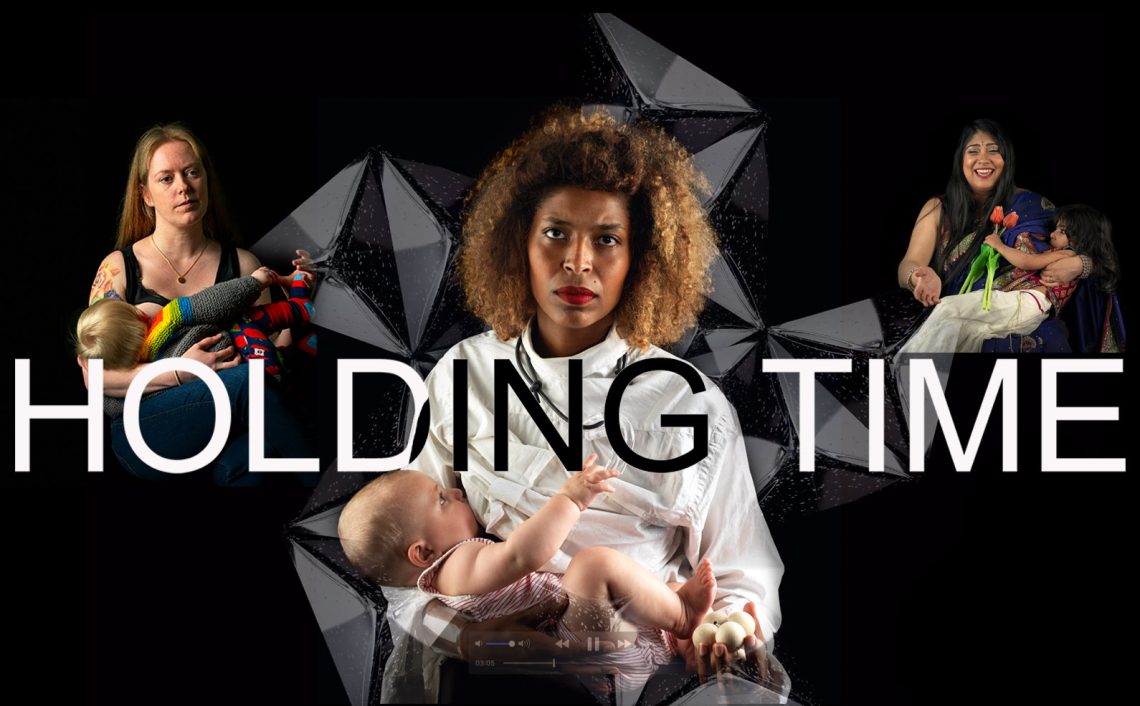

A snapshot of narrative written in 2019, Anna Horn writes about the challenges of breastfeeding her first child through the lens of race, class and migration. In story form, she shares her transition from living in the American South to making a home and starting a family with her husband in London, UK. She outlines the challenges she faced with breastfeeding contextualising the experience with her own cultural memories. This text in a sense “holds time” as Anna recounts her experiences, perceptions and feelings around breastfeeding documented in her earliest stages of motherhood.

I’m a black woman – born and raised in the American South. Sweltering summers, sweet tea and Sunday school perfectly depict my childhood. I’m proud of my Southern roots, upheld by faith, family and hospitality. America’s history is colourful and rich though sadly its current structure is built upon unequal foundations cracked from injustices. Growing up black and female in the South shaped my experiences and when I moved to England to be with my husband, I saw London through the eyes of a young Black woman from rural North Carolina.
After the birth of my daughter and thousands of miles away from my kin, even the daily phone calls and video chats with my relatives, invaluable as they were, couldn’t provide me with the practical support I needed. Back home, close-knit communities are comprised of distant relatives and generational friendships. After my husband went back to work, I sat on the couch, breastfeeding my baby for seemingly an eternity, unsure who I could call upon to help me with preparing food or household chores. Like many women in the US and the UK, a capitalistic culture, which favours economic growth over healthy families, failed me. Parenting books, health care professionals and grassroots organisations stepped in to provide breastfeeding support whereas previously women would have learned these skills from their mothers, grandmothers and aunties.
Despite public health initiatives to increase breastfeeding in both the US and the UK, in my experience attitudes haven’t much shifted. During my pregnancy, I registered my unborn daughter at a nursery in order to secure a place, thus avoiding the dreaded year-long nursery waiting lists. My husband and I were immediately sold on the facilities and the bilingual component alongside the care, however when I asked the nursery manager about feeding expressed breast milk, the breath was knocked out of my lungs. “Many women make these plans, but they don’t always turn out the way they want,” she said confidently. After catching a glimpse of my face, she quickly assured us that staff were trained to handle breast milk and were happy to follow our wishes. Little did I know that this was the first of many accounts of ‘helpful’ advice from various people, which increased anxiety and minimised my breastfeeding confidence.

Growing up I was surrounded by extended family, new babies at the centre, cared for by every household member. It wasn’t uncommon for grandmothers, sisters and cousins to support new mothers during the postnatal period and even chip in with childcare when women returned to work. I longed for those familiar faces and the extra pairs of hands for the majority of my maternity leave in England. Finally, when my daughter was 3 months old, my husband and I took her to America, down South to my hometown. I didn’t have to worry about food as my uncle prepared all of our meals. My aunts helped with laundry and offered to babysit while I went out for short periods. Long, lonely days with a young baby were replaced with people being around for socialising and to provide help if I needed it. It was the care I desperately needed, especially since I continued to struggle with childbirth related issues.
Multiple generations living under the same roof is a common cultural value among African Americans – Grandma’s not going to stay in a nursing home if it can be helped. There are many benefits, for everyone involved, to live in this way. However, in my experience, this set up didn’t necessarily help breastfeeding. Luckily, breastfeeding was already established by the time we travelled to North Carolina. However, this didn’t stop my choices from being undermined. Relatives were frustrated that they couldn’t bond with our daughter through formula feeding with a bottle. In the heat of the summer, in a new country, surrounded by new sights and faces, my daughter nursed often which led my well-meaning aunts to believe that she just wasn’t getting enough to eat. Auntie insisted on adding cereal to formula milk, and was embarrassed by me breastfeeding in public. My husband was a constant source of support and my cousins often pulled me aside for reassurance. “Just ignore it,” they said.
Anxiety and frustration occupied my mind as I nervously made my case for breastfeeding. I knew the facts – human milk is perfectly designed for human babies. However, it’s not easy going against the grain when it’s against women that you love and respect. Instead, I continued to breastfeed, accepted support when it came, and thought closely about why people in my community may feel this way about breastfeeding.
America’s current healthcare system is detrimental to many of its citizens, particularly the most vulnerable and marginalised groups. The US has the highest maternal and infant mortality rate among industrialised countries of the world, and black women and their babies are the most affected. Breastfeeding is often cited as a tool to help prevent a lot of the infant deaths among black babies and yet, black women are the least likely group to breastfeed, regardless of education and income. There are a multitude of reasons as to why this may be the case – lack of paid family leave, socioeconomic status, accessibility and inclusion of breastfeeding support groups, racism within the health care system, history of slavery, attitudes about black women’s bodies, and cultural beliefs. I came to realise that the subject was vast. A short summer in the States would not provide enough time to read, research and write about the topic.
Nonetheless, I empathised with the women in my community, as there are a multitude of reasons as to why many black women may not breastfeed in America. One of the obvious reasons is the aftermath of slavery. As a result of being dehumanised, black women’s bodies are often over sexualised. Full lips, round hips and an insatiable sexual appetite – stereotypical characteristics, which are placed upon black women and often perpetuated in mainstream media. Black women’s breasts are aligned with sex and sexuality, not with feeding babies… unless her breasts are feeding the children of white women – a common practice during slavery which forced female slaves to work as wet nurses. Many older women in the African American community will often speak against breastfeeding as it sometimes brings up the ancestral pain of not owning your own body. ‘I’m nobody’s Mammie’ is a common feeling among older black women to combat the longstanding ‘Mammie’ figure, a housemaid who loved to cook, clean and take care of the white family’s children. This image was made most famous by Hattie McDaniel’s character in the film, Gone with the Wind.

To compound these feelings around suppression and lack of autonomy over one’s own body, the push for an ‘independent’ baby is deemed necessary for women to return to work as quickly as possible, hitting the poorest women in our society hardest, which largely includes black women. My family encouraged replacing breast milk with formula to make my transition to work much easier. After all, they felt as though no one would want to look after a young baby, desperately crying for their mother’s embrace. It made me think twice about the attitudes around children and how the assumption breastfeeding babies is harmful to the development of their social skills, making them spoiled and manipulative.
Black women in America who make the decision to breastfeed their baby still fight obstacles, which are unique to being black in America. Not only must she overcome the siren call of formula companies and a painfully short maternity leave, when she does seek breastfeeding advice, are there inclusive health care professionals and organisations to support her? In the early days, I turned to a breastfeeding support organisation back in England to help establish nursing. The help was invaluable to me, though it was not lost upon me that I was often one of few, if not the only, women of colour in attendance. In my experience there was also no one in leadership positions who looked like me either. Though many breastfeeding support organisations work hard to ensure that breastfeeding is a real option for women, the lack of diversity makes me wonder if the unique circumstances of black women and other marginalised groups are at the forefront of the agenda?
On our flight back to England, I carried these questions back with me. I’m a black American woman living in the UK, where the historical and cultural makeup is different to my native country. Breastfeeding rates are equally low in the UK. However the least likely to breastfeed are young, white working class women. I struggled with the thought that I don’t live in the community from which I came and wondered how I could possibly make a difference to low-income, black women in rural areas of the Southern region of the US, when I am living the UK? I also grappled with how I could connect with disadvantaged groups in the UK as an immigrant? As an advocate for disrupting the systemic structures that contribute to health inequalities, I felt it was necessary to add my voice, no matter how small, to the conversation around improving breastfeeding rates and providing more inclusive support.
For the remainder of my maternity leave, I became much more active in a local breastfeeding support group. In an effort to assist all breastfeeding mothers, I hoped to be particularly well placed to support underrepresented groups who seek breastfeeding help. The images of breastfeeding women in mainstream media are limited, images of women from different ethnic backgrounds are even rarer. There are a host of grassroots organisations on various social media platforms dedicated to increasing the visibility of breastfeeding women of colour, particular black breastfeeding women. In a way, I feel honoured to be a part of a movement to deconstruct patriarchy, colonialism, slavery, destructive aspects of capitalism and their impact upon pregnancy, birth and the postpartum period, including breastfeeding.
Now nearly 2 years after the birth my daughter (and still nursing), my commitment to supporting breastfeeding mothers, in particular marginalised groups like black and ethnic minority women, has not wavered. When I returned from maternity leave to my work on a maternal-child health research team, I endeavoured to play an active role in supporting the Study Co-ordinator with her work on breastfeeding mothers living with HIV. I continue to work in the voluntary sector as a breastfeeding peer supporter and have more recently accepted a role as an Infant Feeding Specialist in a London hospital. My work in the world of pregnancy, childbirth and the postpartum period, especially breastfeeding, I believe, is just beginning. I aim to directly serve women, especially the most vulnerable, and to continue to shed further light on a much- needed conversation, inciting initiatives to close the gap in maternal-child health inequalities around the world.

Anna Horn
Doula, Maternal Health Scholar, Activist
Instagram/X: @feministnoire
Anna Horn is certified doula and maternal health scholar-activist,currently undertaking a PhD in anthropology of health at the Centre for Maternal and Child Health Research at City, University of London. Anna’s current research investigates Black and South Asian women’s experiences of group antenatal care in the UK through Black feminist and abolitionist perspectives, exploring the group care model’s potential to disrupt colonial legacies embedded within the maternity care system.
Anna holds nearly a decade of experience in the maternal, infant and HIV/sexual health fields, ranging from epidemiological surveillance on pregnant women living with HIV to frontline work on a busy National Health Service infant feeding team. Anna has also worked as a maternity service user representative for England’s national Maternity Transformation Programme, co-producing maternal and infant health policies and guidelines.
In addition to her doctoral studies, Anna works part-time as an assistant researcher at the University of Sheffield on the Generation Delta project, aimed at understanding the experiences and outcomes of Black, Asian and minority ethnic women in postgraduate studies among other race-gender equity initiatives in higher education.
See also ‘Birthing While Black’, Anna’s moving piece about the ways she was let down by the maternity system as a black woman giving birth in the UK. https://www.redpepper.org.uk/society/race-racism/birthing-while-black-pregnancy-bodies-nhs-childbirth-maternity-medical-racism-carcerality/