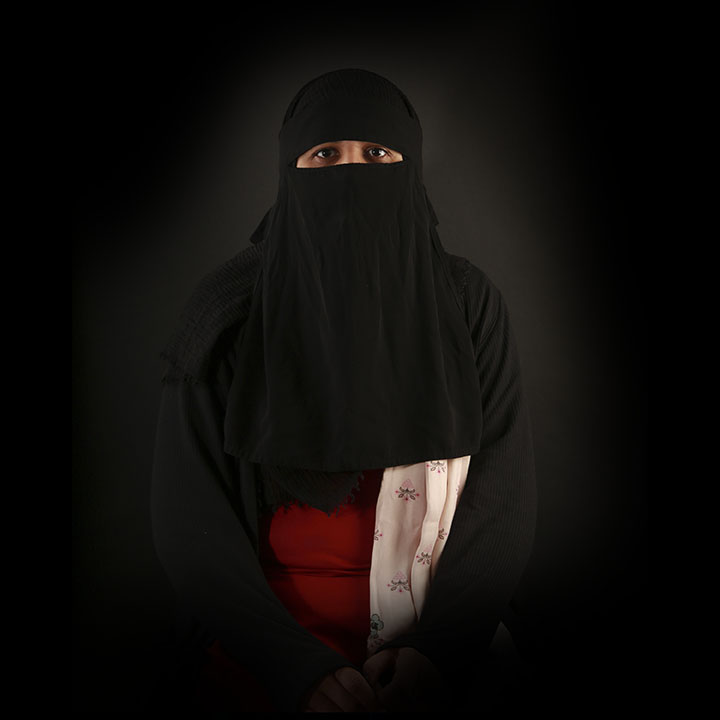
Interview with Salma
[00:00:00] Salma: I have got three children.
[00:00:02] Salma: I’ve got a 10 year old, an 8 year old and a 6 year old. That’s quite a handful. It is quite a handful. And you work at a women’s zone how many days a week? Yes. Currently I work 25 hours. Oh, that’s around the school timings. Yeah. So I drop my kids off and then pick them up as well. And how did you come to be at Woman’s zone?
[00:00:22] Salma: What brought you here? I was a qualified science teacher for over 10 years at working in schools in Bradford, working full time and after my second daughter, I needed part time just because of the kids and so I left my outstanding school that was very good and very Very good school to go work for at a different school that was a bit more flexible, but not as good.
[00:00:49] Lisa: Ah, it’s a shame
[00:00:50] Salma: your school couldn’t give you that flexibility. It was, if they gave it to one person, they’d have to give it to everybody. And it came like a blanket ban kind of thing. But I think in the end it was high pressure. I taught a lot of A level. So I had, when you have young kids, you have to have this because they’re always ill.
[00:01:08] Salma: And especially when they’ve been in nursery since they were babies, so they were always ill. And it got to the stage where I was having to take lots of days off and I’d have these girls that were doing A level biology with wanting to become doctors and dentists. And it wasn’t fair on them and it wasn’t fair on my children.
[00:01:24] Salma: Yeah. So I did give up and I went to a not very nice school. And then I had my son and then I gave up teaching altogether. Ah, but would you consider going back to it? Or would you like what you do now? No, but I do really enjoy what I do now. Especially with the way that How a Supportive Women’s Zone have been.
[00:01:43] Salma: Just because I wasn’t, I did, So my current job, they created for me, when my project, because I was employed to run a genetics project in Bradford. Oh, right. Was that to do with Born in Bradford? It wasn’t, it was with reducing inequalities in communities. So it’s helping families that have got genetic conditions understand their conditions and understand what’s causing conditions And helping with the myths and talking to professionals about how to talk to families.
[00:02:13] Salma: So it’s like a liaison between families and professionals. That project has done amazingly well, but it’s gone in the NHS. And I didn’t want to go to the NHS just because of my kids. And so Women’s Zone created another job for me. What do you do here then? So I am now the operationals manager. So I am in charge of all the projects at Women’s Zone and helping Women’s Zone grow.
[00:02:38] Lisa: Oh wow. Amazing. That’s great. Women’s Zone I think is such an amazing place. And just, it is growing all the time isn’t it? Yes. Yes. It’s good to get in these different perspectives because you’ve obviously got this medical science background really, I know it’s not medical as in being a doctor, but understanding things like genetics is medical isn’t it?
[00:03:00] Lisa: Yes. And public health as well. This project is public health, it’s, well it is public health, it’s the money for it comes via the NHS from public health. Because obviously breastfeeding is So important for child development. Yes. But no more so than for preemies. Yes. For preterm babies. So you mentioned that your daughter was born, is it your daughter 12
[00:03:26] Salma: weeks.
[00:03:27] Lisa: Early? Yes.
[00:03:29] Salma: 28 weeks? 28 weeks on the day if she’d been born the night before. When I went into labour she’d been 27 weeks and seven, six days. And she was born in Halifax as well so they don’t keep a baby that’s under 28 weeks so she was born like literally the morning that they would have kept her if she’d been born a little while.
[00:03:49] Lisa: They don’t keep a baby meaning what happens to the baby? They have
[00:03:52] Salma: to come to the bigger hospital so they have to come to Bradford or Leeds. So I had her 28 weeks.
[00:03:57] Lisa: It’s only really about three weeks after the point where they’re not really able to survive, isn’t it? I mean, there’s 24 weeks. No,
[00:04:04] Salma: the youngest is now 21 weeks, but it is, it massively, like, if you think about the development between a 21 week old and a 20, even every week, actually, it goes bigger and bigger and bigger.
[00:04:16] Salma: Like they say, 32 weeks is normally okay where the lungs have developed to the stage where the baby doesn’t need oxygen. 28 weeks is a big, big jump from there to there, especially when it was my first and I wasn’t expecting it. I’d gone to work like normal, shouted at lots of kids, came home and went into labour.
[00:04:38] Salma: And yeah, it was just very, very unexpected. And what was the cause of that early birth? Um, I think I had, well, from now, from what I can understand of what happened then, I think I had the strep B infection. And I’d had, and I’d had the antibiotics. at my 12 week Genoendia appointment and it must have come back or it mustn’t have got rid of it properly.
[00:05:02] Salma: So I assume that I had the strep. Is that like
[00:05:05] Lisa: a throat infection?
[00:05:06] Salma: Strep B is anywhere so like you can have strep B but it’s, it’s very dangerous in babies. Right. So if the mother carries strep B then you need to have intravenous antibiotics when you’re giving birth at all. Straight A no, or, and they have to keep the baby in so they keep, so all of my other children had to stay in for, either I had to have antibiotics during labor or they kept my youngest.
[00:05:30] Salma: Because it stays
[00:05:31] Lisa: in your system.
[00:05:33] Salma: Yes. Or it can get passed onto the baby and it can, and, and it can cause death in lots of babies. So they are quite vigilant with it as well. What a hugely worrying birth. Yes. The stress must have been out of control. Beyond traumatic. I was in a room with six other ladies and the nurses were checking every single one by one, they’re all going home.
[00:05:56] Salma: My husband came and I said, oh, I’m And we were fast and he was fasting. I wasn’t fasting. And I said, you go home, open your fasting. Come back and pick me up. And then, so he went home and the doctor checked and she’s like, no, you’re four centimeters dilated. You need to go to the labor ward. And then he, I phoned him to say, come back.
[00:06:12] Salma: And he’s like, oh, hang on. I’m coming. I’ll pick you up. And I said, no. I’ve gone into, I’ve gone and my husband at my husband at the time is a pharmacist or her dad is a pharmac. And it is massively worrying, obviously, because, like, we both knew what this could potentially mean for the baby and everything.
[00:06:31] Salma: Thankfully, I got given the steroids and they were amazing. So I got the steroids to develop her lungs, and you have to have another set of steroids 12 hours later. But, like, I needed to push at that point, and so I just broke down and I said, Look, I need the steroids, I need the steroids, so they gave me the steroids.
[00:06:49] Salma: After 10 hours. But the birth was relatively easy, you know. Small, I suppose. Apparently it doesn’t really matter if they’re small or big. Yeah, so apparently smaller births are harder. But I have a very good, yes, every single one I’ve had good, really good births. I sleep through most of my, I know that’s what she was saying.
[00:07:07] Salma: She’s like, why are you sleeping? I was like, well, what do you want me to do? So I sleep through a lot of my labour pains. I’ve got a very high pain threshold by that point. Because all throughout my pregnancies I have Symphysis pubicis dysfunction. So, where my hips no longer like each other or any other muscle in my body.
[00:07:26] Salma: And it is horrendously painful. I think with my oldest I was on I had acupuncture, I had all sorts. With my second and third I was on crutches. through most of my pregnancies, but then that makes my births very painful. By comparison. Yes, because my muscles are very relaxed, so my births have been really easy.
[00:07:49] Salma: But I think with my oldest, because she was in an incubator, she was on a ventilator, she was in an incubator and there was nothing that I could do for her. And the biggest thing that they said is like, she needs breast milk. So even if she, even if she gets half a mil, Get breast milk, breast milk, breast milk, so that became a mission for me.
[00:08:09] Salma: I was, you know, I had to make sure that I had gave her breast milk, so I was And at
[00:08:14] Lisa: that, and many weeks, would you even be producing breast milk? Yeah,
[00:08:18] Salma: as soon as you give birth, so as soon as you start giving birth, your body starts producing oxytocin. Oxytocin also is a hormone that triggers breast milk production as well.
[00:08:26] Salma: And then every time you pump you’re producing more oxytocin. That’s the science behind it. So the more you pump, the more breast milk you’ll get. So that became my mission for the next 12 weeks while she was in hospital. And I, every, I was very regimented. So they said, pretend you’ve got a newborn.
[00:08:42] Salma: So I was getting up every two hours in the night as well, even though she wasn’t with me. And I was pumping and pumping and pumping, so I did
[00:08:48] Lisa: that. My daughter couldn’t digest formula. And I had double mastitis, so I had to re lactate. So I lost all my I went from having loads of milk to having no milk.
[00:09:00] Lisa: And so I had to re lactate, and so it’s every two hours. That is brutal. Yes. It’s, uh, really because you’re so tired. And to wake up and pump But somehow you manage to do it, because you’re so determined, it’s almost like psychotic. Yes,
[00:09:17] Salma: yes, yes, I used to be, yeah, they used to be like, just don’t do it for today, and I’m like, nope, nope, not
[00:09:22] Lisa: gonna happen.
[00:09:22] Lisa: Because you know if you skip that it’s gonna, well, you know that it’s the continual demand that’s gonna build your
[00:09:29] Salma: supply up. Yes, though I was in a very fortunate position, I’ll handle that, where I produced a lot of milk. So I produced like, gallons of milk even with all three of mine so I did produce a lot of milk with, once I had established the breast milk, I did produce quite a lot.
[00:09:45] Lisa: And where did you express, like, did you express in the hospital, in the expressing room, or were you at home doing that, or was it a mixture of the two? Yes,
[00:09:53] Salma: everywhere. Everywhere I went somebody said so we went to visit somebody in London. I expressed at her house as well we before I’d wake up so that we had there was a though they used to put an The partition up around the baby, so watch the baby and express.
[00:10:07] Salma: And that’s how I got it, and that’s how I established it in the hospital. And then once I was at home, they did say put a picture there, and it’ll, and I did that for a few days, but after that it was just, it was quite easy after, once I got it. Did
[00:10:19] Lisa: it make a difference when they put the partition up, and you expressed it in front of the baby?
[00:10:24] Lisa: Was that in the early days? Yes, that
[00:10:25] Salma: was in the very early days. I think what Do you think it helped your oxytocin levels go up? Potentially, yes. I think I think what they found is that lots of mothers struggled with milk production. So I think what they did, they did, they throw everything at you to get that milk production there.
[00:10:41] Salma: So they do, they are very supportive and they are very insistent that you breast, you produce best milk. There, there is also, There was lots of babies on the ward that were having donated milk because they just weren’t, you know, their mum wasn’t producing enough breast milk so there was that option as well.
[00:10:58] Salma: So it wasn’t that you have to do it but the nurses were quite insistent that it is your breast milk that’s going to be the best.
[00:11:05] Lisa: Oh yeah, yes, they do know that and also donor milk will be somewhat preserved. Yes. It will be refrigerated or something, it won’t be as fresh. Yes. Yes. Milk that you’ve expressed that goes straight to your baby.
[00:11:18] Lisa: And there is something about you producing exactly what your baby needs. Which nobody really understands how that happens.
[00:11:24] Salma: Yes. There is there is a lot of that. So there was a lot of skin to skin, so we did a lot of skin to skin. Yes, there was a lot of cat wool there. Because was she, did she have a lot of tubes?
[00:11:32] Salma: Yes. So, were you able to pick her up and put her
[00:11:36] Lisa: on
[00:11:36] Salma: you? Uh, after, yes, after the first, so once they got her, Stabilised. Not trying to die every two minutes yeah, so as soon as she would, but even then like even when she was on me she’d stop breathing, they’d come and take her away and give her oxygen or not even the oxygen, they’d have to do whatever they needed to do and they’d put her back on.
[00:11:56] Salma: They’re like, nope, kangaroo care is amazing, it will help, it will work, just, we just stay at it. That’s
[00:12:02] Lisa: great to hear because I, I’ve interviewed women who’ve had premature babies in different parts of the country and it does seem patchy, like it doesn’t seem, I mean definitely everybody wants you to produce breast milk, but, I don’t know, one woman did tell me that she felt quite unsupported in terms of expressing and, um.
[00:12:26] Lisa: You know, I mean, maybe Yeah. Your, your daughter would’ve been in the NICU for a long time though. Yes. Yes. Was she in there for 12 weeks or, or, she was in
[00:12:34] Salma: 10 intensive care for eight weeks and then she was still in the NICU until, uh, for another extra two weeks. And then yeah, we transitioned home as well.
[00:12:43] Salma: So she was in intensive care for eight 18. How big was she when she came home? She was when she came home, she was. Four and a half kilos, so just under five pounds, but when she was born she was two pounds, so yeah, she was a kilo, she literally, yeah, yeah, in my hand, yeah, yes, yeah so she was tiny, and then, yeah, but she fought, she fought, and she fought, and she fought.
[00:13:06] Salma: They’re survivors, aren’t they?
[00:13:09] Lisa: And does she have any long standing conditions as a result? No, no, nothing. And would you You know, you said that some of the mothers that were in there with you weren’t expressing enough milk. Would you stay in touch with those parents or have any? No. No, we didn’t. I think it was Because
[00:13:28] Salma: you’d see them a lot, wouldn’t you?
[00:13:29] Salma: We, we did. We go through a lot together, really. Yes, but I think maybe I was in a very, very You’re in the bubble, that’s your incubator, this is your bubble, that was somebody else’s incubator, that was that person’s bubble. I did notice, and at the time I was just like, no, I did notice that I was treated a lot better potentially than, there was a very young mum, so there was an 18 year old, 17 year old, and they weren’t as supportive of her, they were quite, it was, I mean, it’s only a few years later that I thought actually they didn’t treat her, they didn’t treat her.
[00:14:04] Salma: Me like they treated her or they didn’t treat her like they treated me Because I think she was very young and she just didn’t want to breastfeed and she didn’t want to she didn’t want to put the time into express and They weren’t they I think they did judge her quite a lot Because of that and the
[00:14:22] Lisa: outcomes of her baby.
[00:14:23] Lisa: Do you know what they were?
[00:14:24] Salma: She I think what happened was she put her baby up for adoption And I think that was quite early on that she decided that so I think when they were both in the not in, they were in the High Dependency, no not High Dependency, do you know, in the general ward but in the NICU I think the baby was adopted to given away to somebody else because she didn’t want to take care of her baby.
[00:14:46] Lisa: Oh, I mean it’s, there’s all sorts of sad stories aren’t there, going, all things going on around you in a hospital, because it is just a mixing pot of all these different moments, chance moments of who happens to be there that week or those weeks when you’re there. And yeah, I, I know that children that are fed their mother, I know that if you, if you as a mother can manage to get that lactation going, your child has a lesser chance of readmission.
[00:15:20] Lisa: Yes.
[00:15:21] Salma: Yes. And I think it was, it was establishing it, once these routines were established, I mean, I, she never latched on, ever. We did try, we did try once just for the fun of it. She never had the strength maybe in her mouth? No, because they said if you, if you start, that she will develop the strength, but I think by that point I was producing a lot of milk.
[00:15:43] Salma: Because my body was thinking that this is a 12 week old normal baby. So I was producing a lot of milk and it was just too much for her. She was the equivalent of a five, five pound newborn. Yes, she was the equivalent. Trying to drink the milk of a 12 week old baby. Yes, so she struggled with that as well.
[00:16:01] Salma: So we did just, in the end, we just, and she had reflux as well. So she had quite severe reflux at that time. So they just said she needs to have it thickened. So I’d have to express and then we’d have to put thickener in and then, you know. Which she’d have to have that, it like that which then, I mean it was fine because I had enough in the freezer once she was six or seven months old, so I did stop expressing when she was four months old, so just after she came home, just because it was a newborn baby, a terminally ill mother in law, and pumping was a lot at the time, so I did stop expressing with her There was more than enough milk in the freezer, so we had an entire freezer full of milk.
[00:16:39] Salma: Wow. We did go through most of it, we had to get rid of some of it because I got a bit, I don’t know, I got paranoid that it went off.
[00:16:49] Lisa: Yeah, I suppose you don’t really know, do you? Yes. Like how good is this milk at this point? Yeah. After this amount
[00:16:55] Salma: of time in the freezer, it can like, so when I, obviously I’ve done my research, like, so you can leave it in a deep freezer for up to six months.
[00:17:02] Salma: Six months, or up to even a year, some saying a year. But I wouldn’t ever trust it. Wow. For a year, but, and you wonder,
[00:17:08] Lisa: is it, well, I suppose it’s probably still better than the formula, do you think? But I don’t know. Yeah. Keeping it going, keeping the expression going is. It’s really hard work, isn’t it? I think four months is a long time to express.
[00:17:22] Lisa: People don’t realise it’s so much harder than breastfeeding. Yes, yes. You can’t go anywhere because you’re expressing. Yes. I mean, it’s nice that you can bottle feed in that sense, you have that convenience, but then the actual expressing itself, I don’t know, it sort of takes it out of you. It does take
[00:17:38] Salma: it, and then you’ve got to still do the sterilisation, you’ve still got to, but you’ve got more things to sterilise as well.
[00:17:43] Salma: Yeah. And then storing the breast milk.
[00:17:46] Lisa: Yeah. In
[00:17:46] Salma: the proper way as well, because I didn’t realise that I think initially I didn’t realise you need to store it in sterile bags. So I had bought just normal bags and I’d put lots of milk in normal bags. And then I can remember phoning Tesco’s to ask if their bags were sterile, if their food grade bags were sterile because it never occurred.
[00:18:03] Salma: Yes, they were, they were. That’s good. It was like one of the weirdest conversations that our, that person had ever had. Yeah.
[00:18:10] Lisa: It does tend to be women that I interview that express that have the weirdest conversation. I was talking to a woman the other day and she was talking about how during COVID She was expressing and she had to have this bag search every time she went into the place where she worked and she was just so embarrassed by the pumping stuff that was in her bag.
[00:18:29] Lisa: And in the end she and the guard just agreed that he just wouldn’t look in her bag anymore because he was embarrassed as well. And then there was the whole thing about the milk being in a shared fridge and people seeing it and stuff. It’s actually quite personal, isn’t it? You don’t really want people looking at your milk.
[00:18:43] Lisa: It’s kind of a strange thing, it’s a bit like they’re looking at you. They’re sort of seeing your insides or something.
[00:18:49] Salma: And then when they ask, I say to people, could I have some? But like not, because it’s supposed to be really good for eczema. So I ask, somebody asked me, could I have some of your milk for eczema?
[00:18:59] Salma: And I’m like, do I want my milk on your face? Yeah, because it’s meant for your
[00:19:03] Lisa: baby, isn’t it? And you sort of feel that it’s quite an intimate thing. Yes. Yes. You know, I understand with Islam that actually milk has this sort of very special status. Yes, yes. That if someone is a wet nurse for a baby that they become almost like a family member.
[00:19:20] Lisa: And so there is that idea of it being kind of sacred and, you know,
[00:19:24] Salma: Yeah, it’s really important because I was asked to donate milk and I refused for that reason and it was quite a big, especially when you see these women that were, you know, just next to me like in tears expressing because they just weren’t producing any milk and you had loads and, and it, to have that conversation as well, but saying that the nurses were quite aware of it, I So it wasn’t ever that, oh, you’ve got all this midwire and sharing it.
[00:19:51] Salma: They said, we understand that this is, this is how it works. And I was quite, I was quite. Diplomatic in the way that I said, I’d love to share but I could only share with one person and I’d have to follow that person. You’d have to have a relationship with them. Yes, because my dad’s got milk sisters. Has he?
[00:20:08] Salma: Yes, and they literally, like, they, yeah, they were like, that’s my brother, that is my mahram, he is, like, very important. in my life and he was, he was very attached to his milk sister because the ones that were the same age, the ones that had shared the milk, he was very attached to her and it was quite an important thing as well.
[00:20:27] Lisa: Yeah. Yeah, I know in other religions like for example there’s old texts around Jewish families enlisting the help of a, of a wet nurse and that wet nurse having to be Jewish. So, you know, the bloodline or the milkline. And in Chinese medicine breast milk is called white blood. So it is considered to be, I mean really it’s a miscategorisation to call breast milk food because it is actually much closer to a drug or to medicine.
[00:21:00] Salma: Yeah, yeah, yeah, because you’ve got your antibodies, you’ve
[00:21:03] Lisa: got everything that the baby needs. So it is much more like blood in that sense. You’re getting a transfusion of all the, yeah, the cells and everything, aren’t you?
[00:21:11] Salma: And when the baby latches on, if the baby’s got a particular infection, it’s The infection, your body will pick that up and it’ll produce the antibodies for that infection, which was, which was one of my things.
[00:21:23] Salma: I was like, Oh, my baby needs to latch on, so he’d know my body knows which antibodies to make. So it was quite, it’s quite interesting, especially how it works. So when my son latched on, I was so happy with it. I was like, yeah, he’ll get all the right nutrients that he needs